
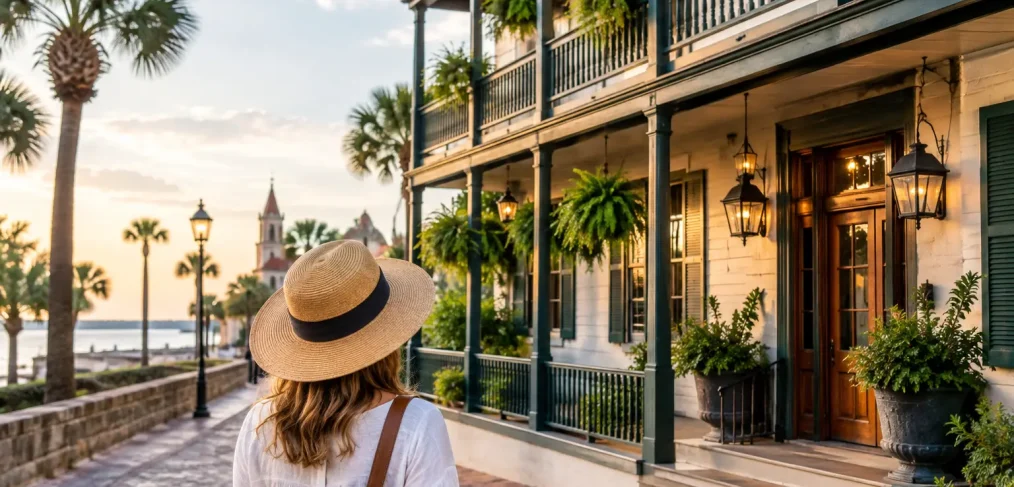
How to Choose Historic Lodging in St. Augustine
A stay on a centuries-old brick street feels very different when your home base has personality to match. Knowing how to choose historic lodging means looking past a pretty exterior and finding a place that puts you close to the St. Augustine moments you came for: coffee before a morning wander, a long lunch, a ghost tour after dark, and an easy place to kick off your shoes between adventures.
Historic lodging should feel like part of the trip, not a compromise you make for the location. The right place gives you character, comfort, and enough breathing room for everyone in your group. Here is how to spot it.
Start with your version of historic
Historic can mean many things. You may picture original wood floors, shaded porches, antique details, and a front door with a few stories to tell. Or you may simply want to stay in a neighborhood where the architecture, streets, and everyday rhythm feel unmistakably St. Augustine.
A building does not have to be a museum to deliver a historic stay. In fact, many travelers are happiest in a thoughtfully updated home near the historic district. You can enjoy colorful design and a sense of place while still having the practical comforts that make a vacation easy, such as a full kitchen, comfortable beds, reliable Wi-Fi, and room to gather.
Think about which matters more to you: the building itself, the neighborhood around it, or the atmosphere inside. Couples planning a quick getaway may love a smaller, design-forward space within walking distance of restaurants and nightlife. Families and friend groups may place more value on bedrooms, shared living space, and the freedom of a full home. Neither choice is more authentic. It depends on how you want to spend your time.
How to choose historic lodging by location
In St. Augustine, location can shape nearly every hour of your trip. A beautiful rental that requires constant driving may not be the best fit if your dream weekend includes lingering on St. George Street, browsing local shops, and heading out for dinner without choosing a designated driver.
Look at the neighborhood, not just the listing pin. Downtown puts you near major historic sights, lively dining, shopping, and evening activities. It is a great match for travelers who want to step outside and be in the middle of the action. The trade-off is that popular areas can feel busier, especially during festivals, holiday weekends, and peak season.
Uptown offers another kind of charm. This area has its own collection of local favorites, galleries, restaurants, and character-filled streets, while keeping the historic district within easy reach. It can feel a little more relaxed while still making it simple to explore. For many groups, that balance is the sweet spot.
Also consider your non-historic plans. If beach time is high on the list, check the drive time and decide whether you want to split your days between town and the coast. St. Augustine is wonderfully compact, but a short vacation moves fast. Choosing a home that supports your top priorities helps you spend less time coordinating and more time making plans on the fly.
Choose space that lets your group relax
A historic hotel room can be charming for one night. For a long weekend with family or friends, it can start to feel like a game of suitcase Tetris. Before booking, count more than beds.
Look for enough bedrooms to protect everyone’s sleep, plus a living area where the group can gather without sitting on the edge of a mattress. A kitchen is especially useful for slow mornings, snacks before heading out, and saving leftovers from a great local dinner. Outdoor space, parking, laundry, and multiple bathrooms can matter just as much, depending on your crew.
Be honest about group dynamics, too. A multi-generational trip often needs a bedroom on the main floor or fewer stairs. A friend group may care more about shared hangout space and proximity to nightlife. Parents traveling with young kids may prioritize a quieter street and an easy place for naps. The best historic lodging works with your travel style rather than asking everyone to adapt to it.
Photos should help you understand the layout, not merely sell a mood. Notice where people eat, where luggage might go, how bedrooms are arranged, and whether common spaces look genuinely usable. A colorful home can be delightfully photogenic, but it should also feel good at 8 a.m. before coffee and at midnight after a full day on your feet.
Look for character with current comforts
Old homes have quirks. That is often part of their appeal. A narrow staircase, a cozy room, or an unusual floor plan can make a stay memorable. But charm should not leave you guessing about the basics.
Read the listing details for the essentials that affect your comfort: climate control, parking, kitchen equipment, bathroom setup, and any stair access. If quiet is important, look for notes about the setting and read recent guest feedback. If you are bringing a larger group, confirm that the dining and living spaces suit the number of people staying there.
Design is worth paying attention to as well. The best historic lodging does not rely on a few old-looking objects to create a mood. It has a point of view. Color, art, furniture, and thoughtful details can make a home feel connected to the creative spirit of the city. That sense of personality is why many travelers choose a guest house over a standard room with the same view from every window.
Let recent reviews do the fact-checking
Listing descriptions set the scene. Reviews tell you what it is like to wake up there.
Read the newest reviews first, then scan for repeated themes. Guests often reveal the details that matter most: whether the location was truly walkable, whether the beds were comfortable, whether the home felt clean and cared for, and whether the host communicated clearly. A few glowing comments are nice. Consistent praise across many stays is far more reassuring.
Pay attention to reviews from travelers who resemble your group. A couple may love the lively energy of a central location, while a family may mention how easy it was to spread out or prepare breakfast. If several reviewers mention the same benefit, it is probably a real strength. If they raise the same concern, believe that pattern too.
More than 350 five-star Airbnb and VRBO reviews give St. Augustine Guest Houses guests a helpful signal: thoughtful homes and dependable hospitality can coexist with plenty of artsy, fun, and colorful character. Still, read with your own priorities in mind. The right stay is personal.
Ask the questions that protect your vacation
Before you book, take one final pass through the practical details. Confirm check-in instructions, parking arrangements, occupancy limits, cancellation terms, and any house rules that could affect your group. If a detail is unclear, ask before committing rather than hoping it works out on arrival.
It also helps to map out one ideal day from the property. Can you walk to breakfast? Is there an easy route to the sights you most want to see? Where will everyone unwind before dinner? This small exercise turns a listing from a collection of photos into a real vacation plan.
A great historic stay gives you more than a bed near the attractions. It gives your group a place to laugh over the day’s stories, choose tomorrow’s adventure, and feel a little like locals for a few bright, memorable days. Pick the home that makes you eager to come back to it, and St. Augustine will take care of the rest.